
Reviewed · JERASH TOURS
Jerash and Amman City Tour from Amman
Jerash gives you the day’s big surprise: a remarkably preserved Roman city spread across broad plazas, colonnades, temples, theaters, and baths. You travel there with a private chauffeur instead of managing Jordanian roads yourself, then return to Amman for the city’s essential sights. Jerash is the main event, but Amman fills in the picture.
I like the private door-to-door transport, especially for a group of up to three. I also like the built-in flexibility. Driver Ahmad Alhafez has been praised for prompt service, useful historical information, camera stops, and allowing plenty of free time. The catch is that this is transport with an English-speaking driver, not a tour with a dedicated local guide, and entrance fees are extra.
In This Review
- Key points at a glance
- Why Jerash is worth the drive from Amman
- Hadrian’s Arch and the Hippodrome
- The Forum, Temple of Artemis, and Colonnaded Street
- Returning to Amman’s Citadel Hill
- The Roman Theater and Amman’s old center
- Jordan Museum and King Abdullah Mosque
- What the private car adds to the day
- Driver service versus a local guide
- Timing, tickets, and practical planning
- Who should book this Jerash and Amman tour?
- Should you book it?
- FAQ
- How long does the Jerash and Amman tour last?
- How much does the private tour cost?
- Is hotel pickup available?
- Is the vehicle private?
- Is an English-speaking driver included?
- Is a local guide included?
- Are entrance fees included?
- Is Wi-Fi available during the drive?
- Can I cancel for a full refund?
Key points at a glance
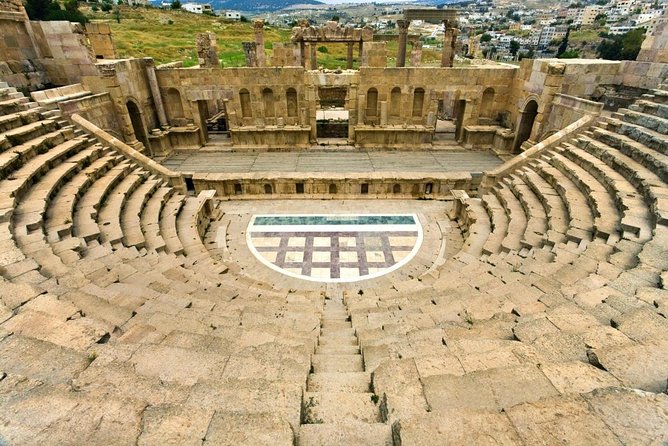
- Roman Jerash in one focused visit: See Hadrian’s Arch, the Hippodrome, Oval Plaza, Temple of Artemis, Colonnaded Street, and Nymphaeum.
- Private vehicle for up to three people: The $200 price is for the group, not each person, which can make it good value for a small party.
- Amman’s major sights included: Visit the Citadel, Roman Theater, old city center, Jordan Museum, and King Abdullah Mosque.
- Wi-Fi and bottled water onboard: Useful for maps, messages, and avoiding roaming charges during the day.
- English-speaking driver, not a dedicated guide: You receive assistance and commentary, but admission tickets and a local guide are not included.
- About seven hours in total: The planned sightseeing time is about two hours in Amman and three hours at Jerash, with driving between the two.
Why Jerash is worth the drive from Amman
Jerash lies about 50 kilometers north of Amman, and the road trip takes you from Jordan’s modern capital to one of the region’s best-preserved Greco-Roman cities. The site is often called the Pompeii of the East, though Jerash has its own character. Instead of a single dramatic ruin, you move through a full urban plan: monumental gateways, public squares, religious buildings, streets, baths, and performance spaces.
The city first grew after the Roman conquest and became one of the Decapolis cities of northern Jordan. Its long Roman period explains the scale of the remains. You are not simply looking at a temple facade. You can follow the old street system and see how public life once worked.
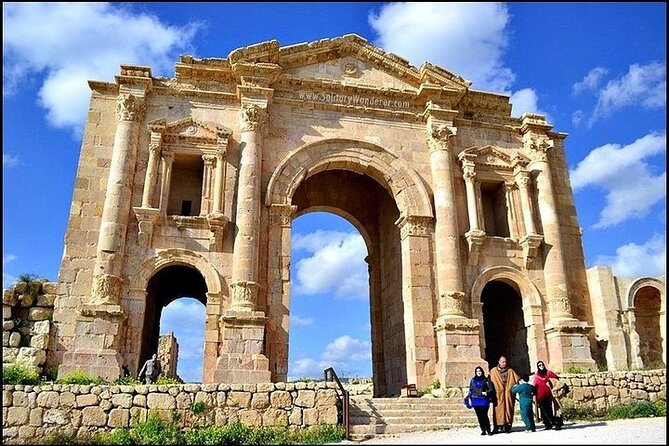
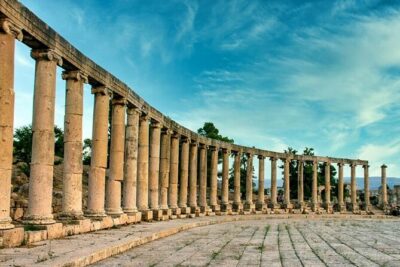
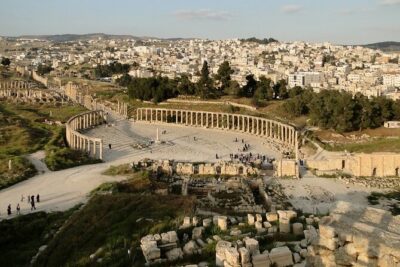
I especially like the way the ruins are arranged for a self-contained visit. Hadrian’s Arch gives you an impressive entrance, while the Hippodrome shows the scale of public entertainment. The Forum, with its unusual oval shape and surrounding columns, is one of the most memorable spaces. From there, the Colonnaded Street leads your eye through the center of the ancient city.
The schedule allows about three hours at Jerash. That is enough for a solid first visit, but it is not an all-day archaeological study. You should expect to keep moving, especially if you want time for Amman afterward. Comfortable shoes matter. The site covers a large area, and the ancient paving can be uneven.
More jerash tours in Amman:
- Full-Day Tour: Umm Qais, Jerash, and Ajloun from Amman
★ 5.0 · 162 reviews - Private Tour of Ajlun and Jerash
★ 5.0 · 130 reviews - Jerash, Ajloun, Umm Qais Day Trip
★ 5.0 · 99 reviews
Hadrian’s Arch and the Hippodrome
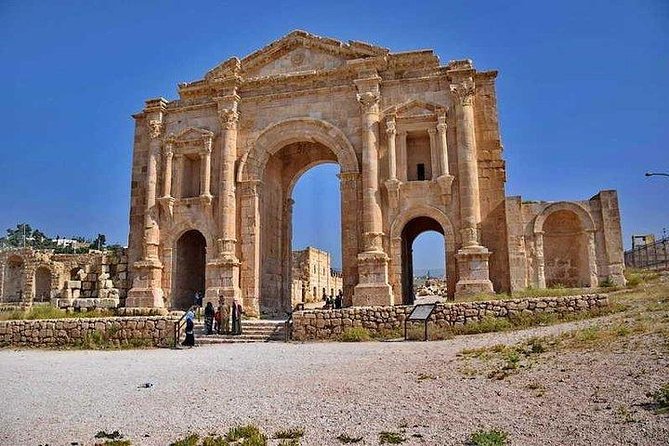
Hadrian’s Arch was built in 130 AD to honor Emperor Hadrian’s visit. It makes a fitting first stop because it shows how Roman cities used architecture to announce power and importance. The scale is easy to appreciate from ground level, and it gives you an immediate sense that Jerash was more than a small provincial settlement.
The nearby Hippodrome could hold about 15,000 spectators. Your driver may explain the site and point out the main features, but remember that a driver is not the same as a licensed local guide. If you want a detailed account of Roman sports, political life, and building techniques, you will need to do some reading beforehand or arrange a guide separately.
This part of Jerash is also useful for photographs. The broad open space helps you understand the relationship between the arch and the larger city. Ask for a little time here rather than treating it as a quick roadside picture stop.
The Forum, Temple of Artemis, and Colonnaded Street
The Forum is one of Jerash’s defining spaces. Its sweeping oval form is framed by columns and opens toward the city’s main route. This is where the scale of the ancient settlement becomes clear. Look back across the plaza and toward the hills, then imagine the space filled with people, animals, merchants, officials, and religious processions.
At the Temple of Artemis, the surviving columns reach about 12 meters high. Each column drum weighs between 20 and 40 tons, a detail that helps you grasp the engineering behind the ruins. The temple was dedicated to Artemis, the city’s patron goddess, and its remains are among the most striking structures on the route.
The Colonnaded Street ties the visit together. Its long line of columns creates one of Jerash’s strongest visual moments, but the street is also practical evidence of how the Roman city functioned. You can trace the route between major public buildings and see how the city was built around movement and access.
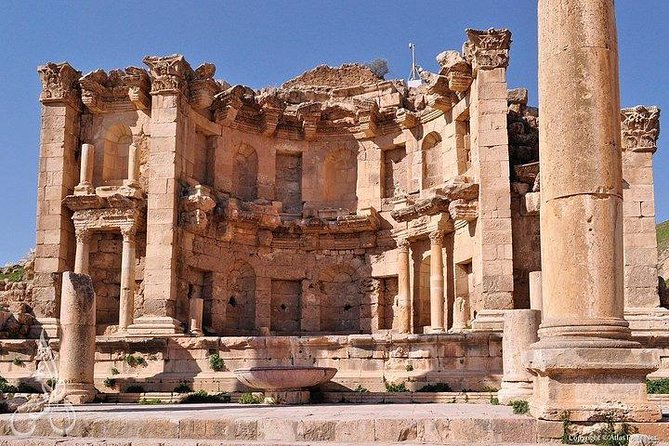
The Nymphaeum adds another layer. Roman cities used such monumental fountains for both decoration and public use. Here, the columns and architectural fragments help you picture the polished city that existed before time and earthquakes reduced it to ruins.
Returning to Amman’s Citadel Hill
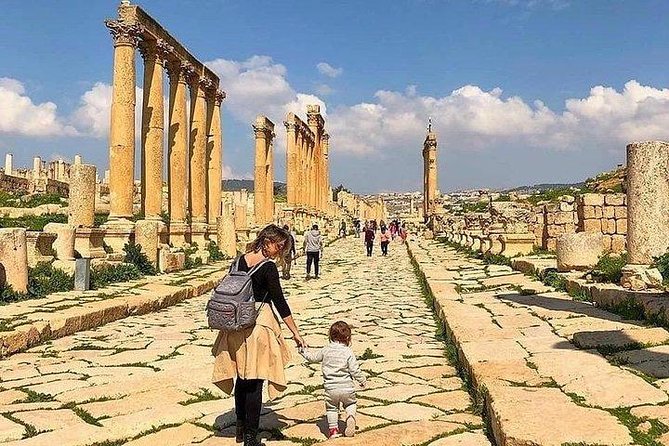
The Amman portion is planned for about two hours, so you need to keep your expectations realistic. The city has several important stops, and you are sampling them rather than exploring each one at length.
The Citadel sits on a hill above downtown. Its position gives you a useful view across Amman’s tightly packed hills and the old city center. The remains include the Temple of Hercules and the Umayyad Palace. These ruins show that Amman’s story did not end with the Romans. Later Islamic rule also shaped the hilltop.
I like the Citadel as an opening or closing view of Amman because it helps you get your bearings. You can see why the city developed around hills and valleys, and you can connect the high viewpoint with the Roman Theater below. The admission ticket is not included, so budget separately for entry.
The stop can be hot and exposed, depending on the season. Bring water, though bottled water is supplied in the vehicle, and use the available free time carefully. If the Citadel matters most to you, tell the driver early that you want enough time there.
A few more Amman trips to weigh up
- Amman Private City Tour & more.
★ 4.5 · 66 reviews - Airport pickup or drop off transfer from or to Amman city
★ 5.0 · 59 reviews - Amazing Panoramic Amman City Tour
★ 4.5 · 57 reviews - Amman: Private Sightseeing City Tour
★ 4.2 · 42 reviews
The Roman Theater and Amman’s old center
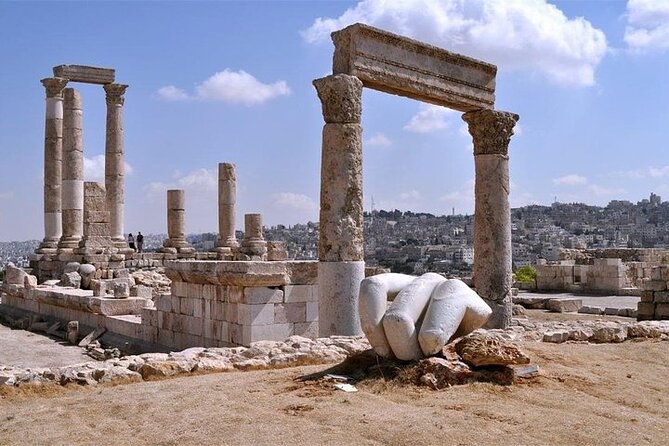
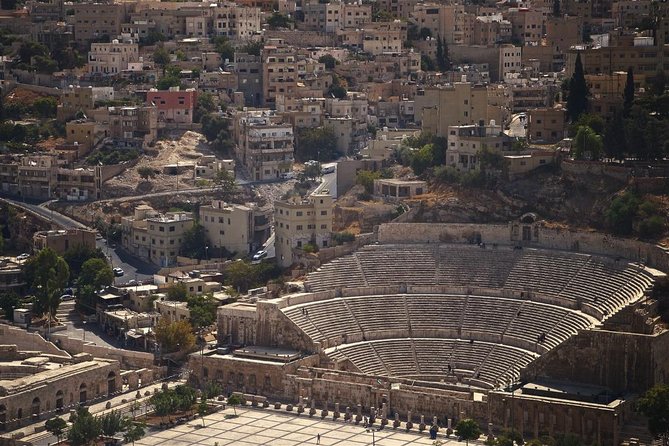
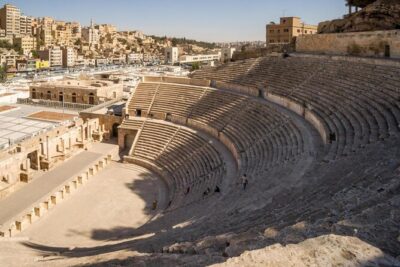
The Roman Theater is one of Amman’s most recognizable landmarks. Built into the slope below the Citadel, it gives you a close look at the way ancient builders used the terrain. From the seating area, you can see how the theater faced the city and how large public gatherings once worked.
The old city center, known locally as Al Balad, adds a more current sense of Amman. This is the part of the tour where you shift from archaeological remains to the living city. The schedule does not promise a long market walk or a food stop, so think of it as a brief orientation rather than a full downtown exploration.
That distinction matters. If you want to shop, linger over coffee, or explore streets at your own pace, two hours for all the Amman stops may feel tight. The private format helps because you can discuss timing with the driver, but the tour still has a fixed overall length of roughly seven hours.
Admission to the Roman Theater is also at your own expense. The supplied information uses the spelling Roman Theature in one place, but it refers to Amman’s Roman Theater.
Jordan Museum and King Abdullah Mosque
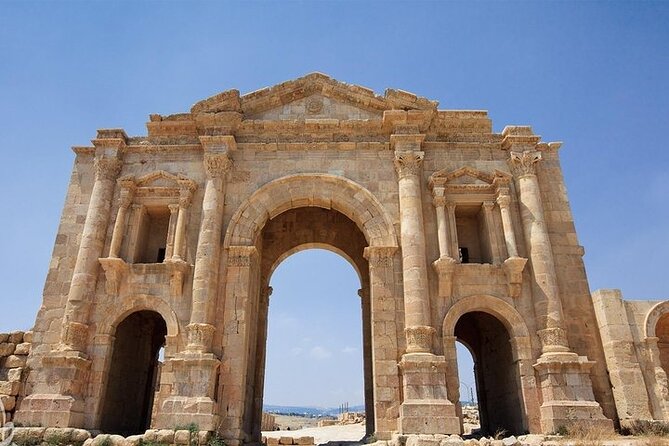
The Jordan Museum is included in the route as a sightseeing stop, but its admission fee is not included. The museum can add context to what you see at Jerash and the Citadel, particularly if you want Jordan’s archaeology presented in a more organized setting.
With only about two hours for five Amman highlights, check the day’s timing with the driver. You may have to choose between a short museum visit and more time at the Citadel or Roman Theater. This is one place where your priorities matter more than a rigid checklist.
King Abdullah Mosque provides a different view of the capital’s religious and modern identity. The visit is subject to the practical conditions of the site, and the supplied details do not specify entry rules, opening times for sightseeing, or dress requirements. Ask the driver what is possible on the day rather than assuming a full interior visit.
Together, these stops make the Amman portion broad rather than deep. You see ancient ruins, a museum, a mosque, and the old center in one compact circuit.
What the private car adds to the day
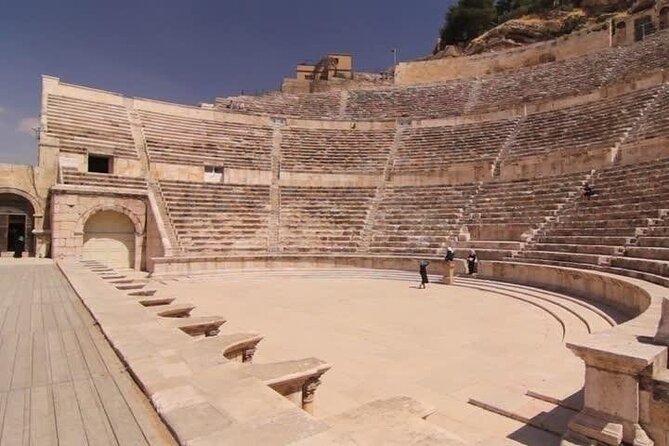
The tour uses a private, air-conditioned vehicle and includes pickup from your Amman address. Only your group participates, so you do not have to wait for strangers at several hotels or fit into someone else’s preferred pace.
For a group of three, the $200 cost works out to about $66.67 per person before entrance fees. For two people, it is $100 each, and for one person it is a costly private outing. The value improves if you care about convenience, direct transport, and the ability to request extra camera stops or free time.
The vehicle has space for one medium-sized piece of luggage per client. That is helpful if you are moving between hotels, but it is not a promise of room for large suitcases or extensive bags. Mention luggage needs when booking.
Free Wi-Fi is a practical extra rather than a sightseeing feature. You can use it for messages, maps, and basic trip planning without relying on your mobile data. Bottled water is included, and the air conditioning matters during a long day between open-air ruins and city hills.
The driver speaks English. Ahmad Alhafez is specifically praised for arriving promptly, helping with hotel pickup, providing historical information, arranging free time, and making camera stops. You may not be assigned Ahmad, so treat those details as a useful indication of the service style, not a guarantee.
Driver service versus a local guide
This distinction deserves plain language. You are booking a private driver who speaks English, not a full guided archaeological tour. The driver can take you between sites, help coordinate the day, and offer information, but the service does not include a local guide.
That setup suits you if you prefer privacy and a flexible schedule. It also works well if you already know the basics of Roman architecture and want reliable transport between Amman and Jerash.
You may want to add a guide if Jerash is the chief reason for your visit. The site contains enough temples, streets, and public buildings to make a guide useful, especially if you want to understand what has been excavated, rebuilt, or reconstructed. A guide is an extra cost, and the tour price does not include one.
Timing, tickets, and practical planning
The experience lasts approximately seven hours. The stated sightseeing schedule gives about two hours to Amman and three hours to Jerash, with the remaining time used for driving and transfers. This is a productive day, but it is not leisurely.
All entrance fees are separate. You should budget for Jerash, the Citadel, and the Roman Theater, as well as the Jordan Museum if you enter. The information provided does not give current ticket prices, so confirm the total before departure.
Pickup is offered from your Amman address, and confirmation is received at booking. The operating hours are listed as all day, every day, but that does not mean every attraction is open for a full visit at every hour. Agree on the pickup time and the order of stops with the provider.
Free cancellation is available if you cancel at least 24 hours before the start time. Cancellations made less than 24 hours ahead, along with late changes, are not accepted for a refund.
Who should book this Jerash and Amman tour?
I would choose this for a small group that wants to see Jordan’s major northern highlights without renting a car. It is especially practical for friends or a family of up to three who value a private vehicle, hotel pickup, and the freedom to ask for photo stops.
It also suits a first visit when you have limited time in Amman. In one day, you cover the country’s most important Greco-Roman site and several of the capital’s main landmarks.
I would think twice if you want long museum visits, extended time in downtown Amman, or a detailed archaeological lecture at every ruin. The schedule is compact, entrance fees add to the price, and a dedicated guide is not included.
Should you book it?
Book this experience if your priority is efficient private transport between Amman and Jerash, with a little flexibility once you arrive. The $200 group price is most attractive for three people, and the included Wi-Fi, air conditioning, water, and pickup remove several small hassles.
Before booking, decide if a driver-only format is enough for you. If yes, this is a sensible way to combine Jerash with Amman in one day. If Jerash is your main passion, budget for a local guide and accept that the Amman stops may need to be shorter.
FAQ
How long does the Jerash and Amman tour last?
The experience lasts approximately seven hours.
How much does the private tour cost?
The listed price is $200 per group for up to three people.
Is hotel pickup available?
Yes. Pickup is offered from your Amman address, with private two-way transfers.
Is the vehicle private?
Yes. The tour uses a private, air-conditioned vehicle, and only your group participates.
Is an English-speaking driver included?
Yes. An English-speaking driver is included.
Is a local guide included?
No. A local guide is not included.
Are entrance fees included?
No. Admission to Jerash, the Citadel, the Roman Theater, and other paid attractions is at your own expense.
Is Wi-Fi available during the drive?
Yes. Free onboard Wi-Fi is included.
Can I cancel for a full refund?
Yes, if you cancel at least 24 hours before the experience start time. Cancellations made less than 24 hours ahead are not refunded.
Just added around Amman
- From Amman :Private full day tour to Jerash ,Ajoune and Um Qais★ 5.0 · 12 reviews
- Queen Alia Airport Transfers From / To Amman, Petra, Dead Sea.★ 5.0 · 3 reviews
- 2-Day Private Tour in Jordan – Deluxe Tent★ 5.0 · 9 reviews
- From Amman to West ( Madaba, Mt Nebo, baptism site and dead sea)★ 4.0 · 5 reviews
- Dead Sea Half-Day Tour from Amman★ 5.0 · 8 reviews
- airport pick up & transportations Services★ 5.0 · 15 reviews
- Umm Qais, Ajloun and Jerash Full-Day Tour from Amman★ 5.0 · 4 reviews
- FROM AMMAN | Petra & Wadi Rum in one day | The Jordanian Mappers★ 5.0 · 12 reviews
Jerash Tours, compared.
Full-Day Tour: Umm Qais, Jerash, and Ajloun from Amman
Read our review →
Private Jerash, Ajloun Castle, and Umm Qais Tour
Read our review →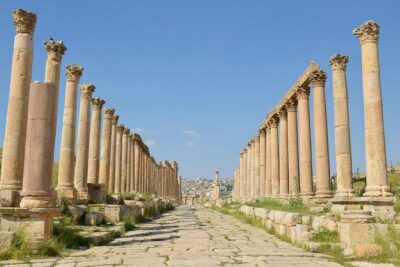
Browse the lists this tour appears in