
Reviewed · PETRA TOURS
Petra Back-Road Trail and Hike
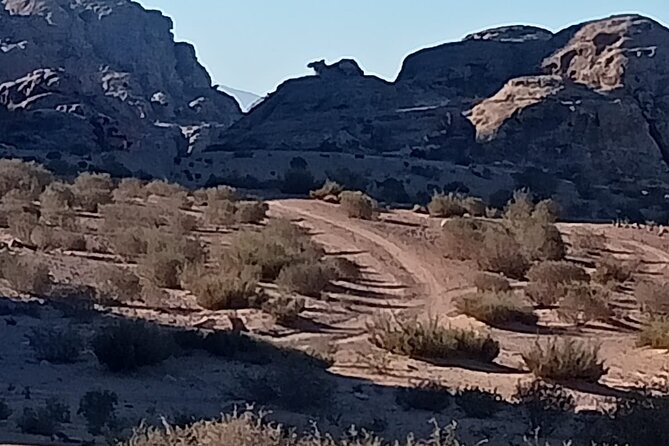
The best part of this Petra tour is the approach: you enter the ancient city from Little Petra, crossing mountain paths and the Siq Ghorab canyon before reaching the Monastery. The route gives you Petra as a journey, not just a monument reached after a short walk.
I like the quiet start among painted rock-cut rooms, and I like the grand finish at the Treasury. The trade-off is clear: this is an 8 to 9 hour hike with steep sections and more than 800 steps to the Monastery, so it is not a soft option for tired legs or poor weather.
In This Review
- Key points
- Why the Little Petra route changes your day
- Starting among the caves of Siq al-Barid
- Crossing Siq Ghorab to the old village
- Reaching the Monastery after 800 steps
- Walking down into Petra’s central city
- Examining the Street of Facades
- The Royal Tombs and the extra climb
- Saving the Treasury for the end
- Smaller remains along the return route
- What $380 means for a group of six
- Who should choose this Petra hike?
- Should you book the Petra Back-Road Trail?
- FAQ
- Where does the Petra Back-Road Trail start?
- What time does the tour start?
- How long does the experience last?
- How many people can join the group?
- What is the price?
- Does the tour include Little Petra?
- Does the route include the Monastery?
- How physically difficult is the hike?
- Are the Treasury and Royal Tombs included in the admission?
- What happens if the weather is poor?
Key points
- Little Petra start: Explore Siq al-Barid and the old Neolithic settlement at Al-Beidha before the main hike.
- Back-road approach: Reach Petra through Siq Ghorab, old mountain routes, and the remains of Shamasah.
- Monastery payoff: See Al-Dayr, one of Petra’s largest monuments, after a demanding stair climb.
- Small private group: The $380 price covers a group of up to six, making the cost more reasonable when shared.
- Long main-city visit: Continue past Qasr Al-Bint, the Colonnaded Street, tombs, the Nymphaeum, the Byzantine Church, and the Treasury.
- Fitness matters: Expect a full day on foot, steep ground, stairs, and weather-dependent operation.
Why the Little Petra route changes your day
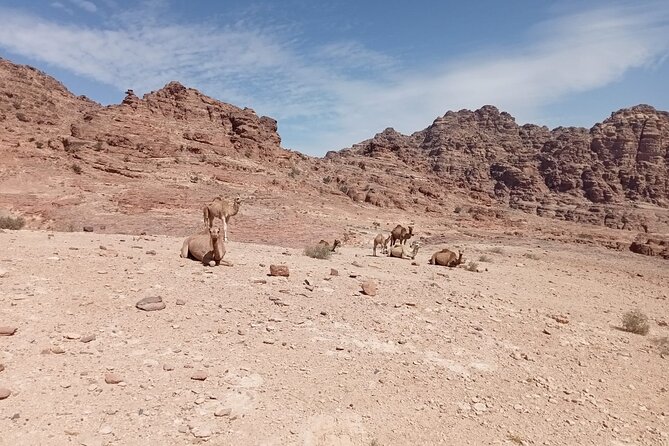
Most people picture Petra as the dramatic walk through the narrow Siq to the Treasury. This route takes a different approach. You begin at Little Petra, also called Siq al-Barid, then cross the hills toward the Monastery and continue through the central archaeological area.
That order matters. Instead of reaching the Treasury first and then deciding how much energy remains, you spend the day building toward Petra’s major monuments. The Monastery comes as the first major climax, while the Treasury arrives later, after the route passes through the old city.
I like this arrangement for anyone who wants more than a quick photograph at Al-Khazna. You see smaller sites, old paths, mountain scenery, tombs, and remains of daily life before reaching Petra’s most famous facade.
The drawback is the physical cost. This is not simply a sightseeing transfer with a few easy walks. You should be comfortable with a full day outside and a moderate level of fitness. The route may feel too long if your main aim is only to see the Treasury.
More petra tours in Petra:
- Amman: Petra, Wadi Rum, and Dead Sea 2-Day Tour
★ 4.9 · 1,173 reviews - 2-Day Tour: Petra, Wadi Rum, and Dead Sea from Amman
★ 5.0 · 1,141 reviews - From Amman: Petra & Wadi Rum Private or group Day Tour
★ 4.9 · 750 reviews
Starting among the caves of Siq al-Barid
The first stop is Al-Beidha, where you spend about two and a half hours around Little Petra and the Neolithic settlement of Beidha.
Siq al-Barid means cold canyon, a fitting name for a narrow rock corridor that can feel shaded and enclosed. It is much shorter than Petra’s main Siq, but it still opens into wider pockets with rock-cut rooms and temple-like spaces.
Look for the painted houses and carved chambers along the route. These details make Little Petra useful as an introduction. You begin to see how people shaped the sandstone for homes, ritual spaces, storage, and public use before you reach the grand facades farther inside Petra.
The nearby Neolithic village adds another layer. Beidha contains remains linked to one of Jordan’s oldest settlements, where hunters and gatherers lived seasonally. It is a good reminder that Petra was not created in one brief period. Human use of this area stretches far earlier than the Nabataean monuments most people come to see.
The stop is also practical. You get a short tour of Little Petra before committing to the longer route. If you arrive at the day with no sense of the terrain, this first section helps you understand the scale of the hills and canyons ahead.
Crossing Siq Ghorab to the old village
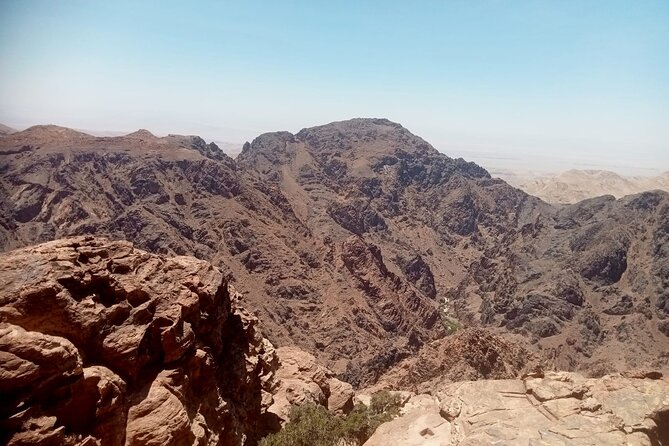
From Little Petra, the route continues on foot through mountain scenery toward the main Petra site. One key point is Siq Ghorab, a large canyon that leads toward a place called Shamasah.
The information provided for this tour describes Shamasah as an old village with remains connected to people who lived here thousands of years ago. You should expect this section to feel less polished than the central monuments. That is part of its appeal. You are moving through an older, rougher setting rather than following only the main visitor path.
The back route gives you a stronger sense of distance. Petra was not just a single canyon and a handful of facades. It was a large settlement spread through difficult mountain terrain, and this hike makes that geography part of the experience.
Your guide leads the route, but the amount of historical explanation can shape the quality of the day. One published rating was strongly negative and criticized the experience, while another praised the guide’s route through the scenery and the way the Treasury became the final reward. Since the overall score is 4.2 from five ratings, I would ask in advance who will guide your group and how much historical interpretation is included.
Reaching the Monastery after 800 steps
The route eventually brings you to Al-Dayr, Petra’s Monastery. This is the largest physical challenge of the day and one of its best rewards.
The final approach follows an ancient rock-cut path with more than 800 steps from the Basin Restaurant area. You will need to pace yourself. The climb is not a quick stairway to a lookout. It is a sustained ascent, and it comes after the hike from Little Petra.
The Monastery measures roughly 47 meters wide by 48.3 meters high, though the tour description also gives rounded figures of about 50 by 45 meters. Either way, the scale is enormous. Its facade was carved in a style similar to the Treasury, but the building is broader and feels more isolated among the hills.
The name Monastery comes from crosses carved inside, suggesting later Byzantine use as a church. It was originally built as a Nabataean tomb, probably in the third century BCE. That change in use is one of the most interesting details to ask your guide about, since the building reflects more than one chapter of Petra’s past.
Allow the full two hours listed for this stop. You will want time to recover from the stairs, study the facade, and take in the mountain views. The route description also promises a panoramic view toward Wadi Araba and the mountains to the west. The setting is as important as the carved stone here.
A few more Petra trips to weigh up
- Dana to Petra Trek + Wadi Rum & the Dead Sea – 9 Days
★ 5.0 · 165 reviews - Petra to Wadi Rum Trek – 6 Days
★ 5.0 · 11 reviews - Jordan Trail: Dana to Petra 4-Day Trekking Tour
★ 4.4 · 7 reviews - Full Day Desert Tour, Jeep & Hiking
★ 5.0 · 98 reviews
Walking down into Petra’s central city
After the Monastery, the route heads toward the main old city. This is where the day shifts from a remote approach to a sequence of major archaeological remains.
Qasr Al-Bint is part of this section. The name is commonly associated with a temple, and the route also leads toward the Colonnaded Street and its triple gate. The street was originally Nabataean and later altered during the Roman period.
The Colonnaded Street was restored to about six meters wide in the ancient city. The excavated remains indicate buildings of one or two stories along the road. Today, you see fragments rather than a complete urban block, so your guide’s explanation helps you picture how the space once worked.
I find this section valuable because it changes your view of Petra. The famous facades can make the place look like a cemetery carved into cliffs. The street, gates, temples, and public fountain show that Petra was also a functioning city with movement, commerce, and civic spaces.
The stop is scheduled for about an hour. After the Monastery climb and the long approach, this may be the point where your legs begin to complain. Wear sturdy footwear and use the time to walk steadily rather than rush from one photo stop to the next.
Examining the Street of Facades
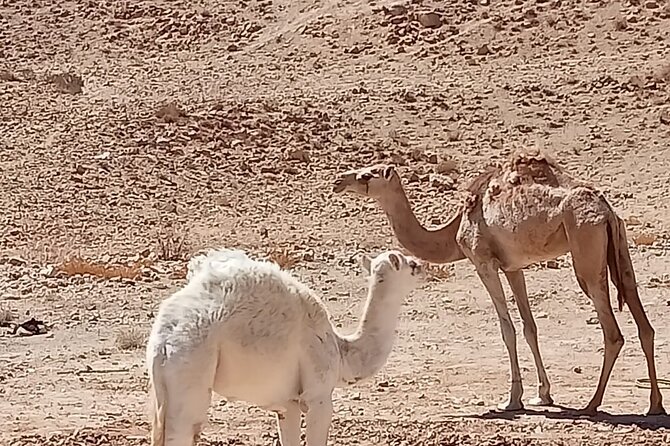
The Street of Facades takes about 30 minutes. It is a line of tombs cut into the rock, with several chambers accessible from the path.
Tomb 67 receives special attention because its upper level contains a funeral chamber. The facades here are less famous than the Treasury, but they are easier to examine at close range. You can look at the entrances, room layouts, and variations in the carved fronts without needing a separate climb to a high viewpoint.
This is a short stop, yet it works well after the Colonnaded Street. You have just seen Petra as a city. Now you return to the tombs and consider how the Nabataeans used the cliffs around that city.
Do not expect every interior to be open or fully preserved. The appeal is in comparing the tomb fronts and noticing how much of Petra’s architecture remains incomplete, weathered, or reduced to foundations.
The Royal Tombs and the extra climb

The Royal Tombs rise above Petra’s central area on the western slope of Jabal al-Khubtha. The group includes the Urn Tomb, Silk Tomb, Palace Tomb, Corinthian Tomb, and Tomb of Sesto Fiorentino.
The Urn Tomb requires a staircase climb. During the Byzantine period, it was used as a place of worship, another example of Petra’s monuments being reused long after their original purpose changed.
The Silk Tomb gets its name from the strong bands of sandstone color across its facade. The Palace Tomb and Corinthian Tomb add more variety to the sequence, while the Tomb of Sesto Fiorentino connects Petra with a later Roman presence.
This stop is listed at about an hour, but its position matters. You may already have covered many miles and climbed the Monastery stairs. If the schedule becomes tight, ask your guide how the Royal Tombs fit with the remaining walk to the Treasury.
The Royal Tombs are marked as not included in the admission details provided for the tour. The Treasury is also marked not included, while several other stops are marked included. That wording is not fully consistent, so confirm which entrance fees are covered before you pay.
Saving the Treasury for the end
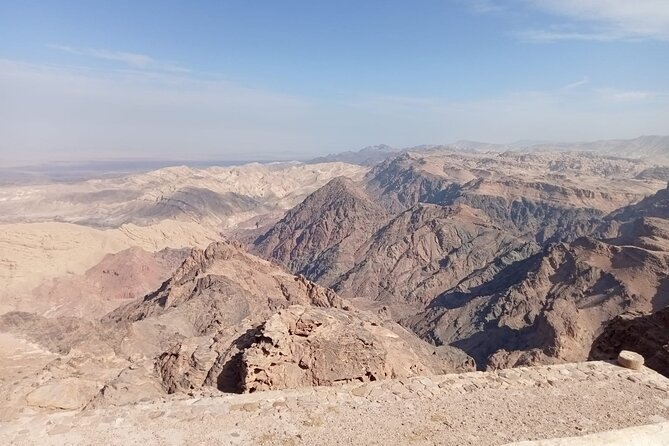
The Treasury, or Al-Khazna, is scheduled for about an hour and a half. Reaching it late in the route gives the day a strong finish.
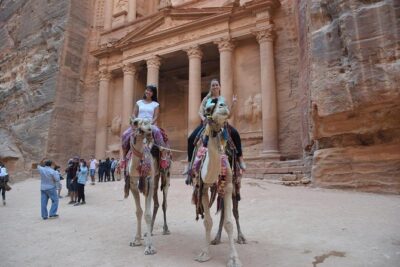
The facade rises roughly 39 to 40 meters and measures about 25 meters wide. Corinthian capitals, carved figures, friezes, and the famous urn make it one of Petra’s most recognizable monuments.
The local story says the urn held a pharaoh’s treasure. The urn is actually understood as a royal memorial, and the building’s original purpose remains uncertain. Inside are three chambers, one central room and two on either side, though the exterior is the feature that most visitors come to see.
I like the choice to place the Treasury near the end. After the long walk, the canyon route, the Monastery, and the central ruins, Al-Khazna feels earned rather than simply encountered at the start of the morning.
The practical issue is timing. You begin at 9:00 am and may spend the entire day moving between sites. At the Treasury, make sure you have enough time to appreciate the facade instead of treating it as a final rushed stop before the Visitor Center.
Smaller remains along the return route
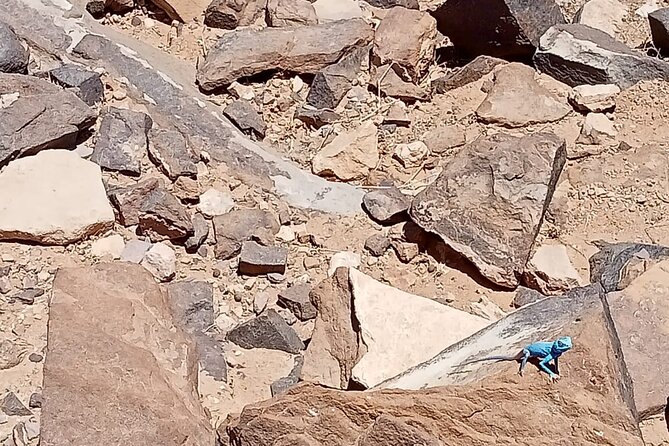
The Nymphaeum takes about 10 minutes. It was a public fountain along the Colonnaded Street, though only the foundations remain today, partly shaded by a tree.
This is a quick stop, but it helps explain the city’s public infrastructure. Petra was not only rock-cut tombs and temples. Water management and public fountains mattered in a dry environment, and even a foundation can point to that larger system.
The Byzantine Church also takes about 10 minutes. Its ruins were not identified until the 1990s and date from the sixth or eighth century according to the supplied information.
The church used materials connected with earlier Nabataean and Roman building traditions, including reused stone elements, windows, doors, and reliefs. Its presence shows how Petra continued to change as religious and political control shifted.
Because both stops are brief, you will get more from them if your guide explains what you are looking at. Otherwise, the Nymphaeum can appear to be little more than a few stones, and the church may be difficult to read from its ruins.
What $380 means for a group of six
The listed price is $380 per group, with a maximum of six people. That works out to about $63 per person if six people share the booking. For two people, the same price becomes $190 each, so the value depends heavily on group size.
You are paying for a long guided route, pickup options, a small party, and access to an approach that is more involved than a standard Petra visit. The price is easier to justify if you want the back-road hike and a guide’s help connecting Little Petra, the Monastery, and the main city.
It is harder to justify if you only want the Treasury and a short visit. In that case, you may be paying for many hours of walking that you do not really want.
Admission coverage needs checking. Al-Beidha, the Monastery, the Colonnaded Street, the Street of Facades, the Nymphaeum, and the Byzantine Church are marked as included in the stop details. The Royal Tombs and Treasury are marked as not included. Ask for a precise breakdown, since entrance arrangements can affect the final cost.
The tour offers free cancellation up to 24 hours before the 9:00 am start. It requires good weather, and poor conditions may lead to a different date or a full refund.
Who should choose this Petra hike?
I would choose this route if you want to walk into Petra through the hills, see Little Petra first, and give the Monastery a central role in the day. It suits people who enjoy archaeological sites more when connected by a real route rather than visited as isolated photo stops.
A group of four to six gets the strongest price value. The small maximum also makes it easier to keep a steady pace and ask questions than on a large coach excursion.
You should think twice if you have limited mobility, dislike long hikes, or want an easy sightseeing day. The tour asks for moderate physical fitness, and the Monastery section alone includes more than 800 steps. The full route can also feel demanding because the major Petra sights come after the back-road approach rather than before it.
Pickup is offered, or you can meet the group at Little Petra. The start time is 9:00 am. Service animals are allowed, and the meeting area is near public transportation.
Should you book the Petra Back-Road Trail?
Book it if the journey matters as much as the monuments. The route from Little Petra through Siq Ghorab to the Monastery gives you mountain scenery, old settlement remains, and a sense of Petra’s scale that a short central-city visit cannot provide.
Before booking, confirm the guide’s name and experience, the exact pickup plan, the entrance fees included, and how much time will be spent at the Treasury and Royal Tombs. The small set of ratings is mixed, including one very strong criticism, so clear communication is sensible.
If your group can share the $380 cost and handle a full day on foot, this is a memorable way to connect Petra’s quieter approach with its grandest monuments. If you want a short, gentle introduction, choose a simpler Petra route instead.
FAQ
Where does the Petra Back-Road Trail start?
You can be picked up at the beginning of the experience or meet the group at Little Petra, also called Siq al-Barid.
What time does the tour start?
The stated start time is 9:00 am.
How long does the experience last?
The tour lasts approximately 8 to 9 hours.
How many people can join the group?
The maximum group size is six people.
What is the price?
The price is $380 per group of up to six people.
Does the tour include Little Petra?
Yes. The route includes a guided visit to Little Petra and the Neolithic Village of Beidha.
Does the route include the Monastery?
Yes. The tour includes a visit to Al-Dayr, also known as the Monastery, after the hike from Little Petra.
How physically difficult is the hike?
You should have a moderate level of physical fitness. The route includes a long hike and more than 800 steps leading to the Monastery.
Are the Treasury and Royal Tombs included in the admission?
The provided details mark admission for the Treasury and Royal Tombs as not included. Confirm the exact fee arrangements before booking.
What happens if the weather is poor?
The experience requires good weather. If it is canceled because of poor conditions, you can be offered another date or receive a full refund.
Just added around Petra
- Transfer From Dead Sea To Petra★ 5.0 · 4 reviews
- Private One Day Petra from Dead Sea with Hotel Pickup★ 5.0 · 6 reviews
- Petra Excursion from Dead Sea★ 5.0 · 8 reviews
- Petra Day Tour from Dead Sea★ 5.0 · 6 reviews
- Dead sea to Petra★ 5.0 · 3 reviews
- Petra Private Transfer to or from Dead Sea★ 5.0 · 5 reviews
- Petra Private Guided Tour★ 5.0 · 4 reviews
- From Petra to Wadi Rum, then back to Amman or the airport.★ 5.0 · 16 reviews
Petra Tours, compared.
2-Day Tour: Petra, Wadi Rum, and Dead Sea from Amman
Read our review →

2-Day Petra, Wadi Rum and Dead Sea Tour from Amman
Read our review →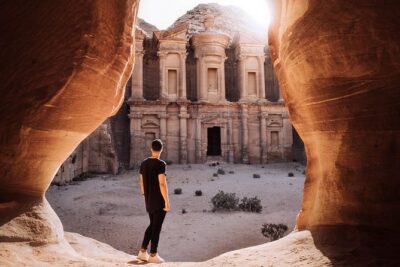
3-Day Private Tour from Amman: Petra, Wadi Rum, Dana, Aqaba, and Dead Sea
Read our review →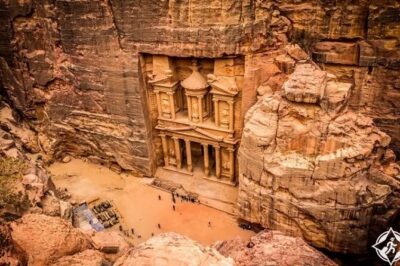
Petra & Wadi Rum: Full Day Private Tour with Hotel Pickup
Read our review →Browse the lists this tour appears in