
Reviewed · WADI RUM DESERT TOURS
Stargazing Adventure in Jordan
Wadi Rum’s dark desert sky is the real star of this 90-minute evening outing. At a small observatory, professional astronomers first explain the cosmos, then guide you outside with a green laser and computerized telescopes. It’s an easy way to enjoy the night without driving a desert track after dinner.
I like the two-part format, since you learn the sky with your eyes before turning to equipment. I also like the included camp transfers, plus the candle-lit laser walk and long-exposure group photo. The main caution is that telescope viewing depends on weather, equipment, and what is visible that night, so expectations should stay realistic.
In This Review
- Key points to know before booking
- Why Wadi Rum works so well for stargazing
- The 20-minute presentation gives the night some context
- The green laser turns the sky into a map
- The telescope session focuses on distant targets
- The two-group rotation keeps the 90 minutes moving
- Transfers make the night easier
- The final photo is a small but useful extra
- Is $30 a fair price?
- Who will enjoy this most?
- Practical details for a smoother evening
- Should you book the RumSky Adventure?
- FAQ
- Where does the stargazing experience take place?
- How long does the activity last?
- What time is pickup in winter?
- Is transportation included?
- What happens during the indoor presentation?
- Do I use a telescope during the activity?
- Will I learn about constellations?
- Is a group photo included?
- Is bottled water included?
- What happens if the weather is poor?
Key points to know before booking
- Pickup follows dinner: In winter, collection from local Disi Area camps begins around 7:45 PM. Summer times change, so check the schedule.
- Two astronomy sessions run in rotation: One group studies constellations with a laser while the other uses GPS-enabled telescopes, then you switch.
- The presentation lasts 20 minutes: It takes place indoors in a seated hall and gives you useful context before the outdoor viewing.
- The experience costs $30 per person: That includes the astronomy program, telescope access, transfers from most local camps, and a group photo.
- The group can be large: Capacity reaches 120 people, although the outdoor program is divided into two equal groups.
- Weather matters: If poor conditions force cancellation, you can choose another date or receive a full refund.
Why Wadi Rum works so well for stargazing
The appeal here is simple: less artificial light means more of the night sky can show through. Wadi Rum is far removed from the bright streets of a large city, making it a sensible place to look for constellations, planets, nebulae, and distant galaxies.
That does not mean every night will produce perfect viewing. Clouds, haze, moonlight, and atmospheric conditions can affect what appears through a telescope. The experience requires good weather, and the provider may cancel if the sky is not suitable.
You should also keep the setting in perspective. This is a desert observatory near the camps, not necessarily a remote expedition far beyond all accommodation. One disappointing account came from someone expecting a more isolated viewing site and finding the laser portion basic and the telescope session underwhelming.
For most people, the value comes from the complete evening program rather than a promise of spectacular images every time. You get an introduction, a guided tour of the stars, access to large telescopes, and transport back to camp. That is a useful package for $30, especially if you are already staying in Wadi Rum.
More Wadi Rum Desert Tours in Aqaba
- Wadi Rum Full Day Jeep Tour + Overnight & Dinner in Bedouin Camp
★ 5.0 · 368 reviews - Wadi Rum: Morning or Sunset Jeep Tour
★ 5.0 · 285 reviews - Wadi Rum Cave Camping with Jeep Tour
★ 5.0 · 200 reviews
The 20-minute presentation gives the night some context
The evening begins indoors with a presentation on a large screen. You sit in a hall while a professional astronomer explains the cosmos for about 20 minutes.
This opening matters more than it may sound. Looking through a telescope without knowing what you are seeing can feel like peering at random points of light. The presentation gives you a basic map before you step outside, so the later explanations have somewhere to land.
The session is designed for a general audience. You do not need astronomy experience, and the format is intended to be easy to follow. One strong account praised the lecture for being clear, fun, and full of useful information. That is a good sign for anyone who likes an evening activity with substance, not just a quick photo stop.
The talk also helps set practical expectations. The sky is not a giant screen that displays every target on demand. What you see depends on the date, weather, and visible position of celestial objects. A good presentation makes the experience worthwhile even if one particular planet or galaxy is not available that night.
The green laser turns the sky into a map
After the presentation, the group goes outside and divides into two equal sections. One group begins the naked-eye astronomy session, while the other moves to the telescopes. At the halfway point, the groups switch.
During the laser session, an astronomer uses a powerful green beam to point out constellations, zodiac signs, and directions. A candle track surrounds the viewing area, adding a small amount of light without turning the site into a brightly lit attraction.
This is the most accessible part of the experience. You can follow the guide’s hand and laser across the sky, then try to recognize the same shapes later on your own. The session also covers the daily and annual movement of the stars, along with ways to use the stars for direction.
The stories behind the constellations add another layer. The astronomer explains myths from different cultures, so the sky becomes more than a collection of scientific names. You get astronomy, navigation, and storytelling in one 35-minute segment.
The laser presentation will probably suit you best if you enjoy learning how to find your bearings in the night sky. It may feel basic if you already know the major constellations or expect a highly technical astronomy lesson. That is a fair limitation, but beginners will likely find the clear pointing and spoken explanations useful.
The telescope session focuses on distant targets
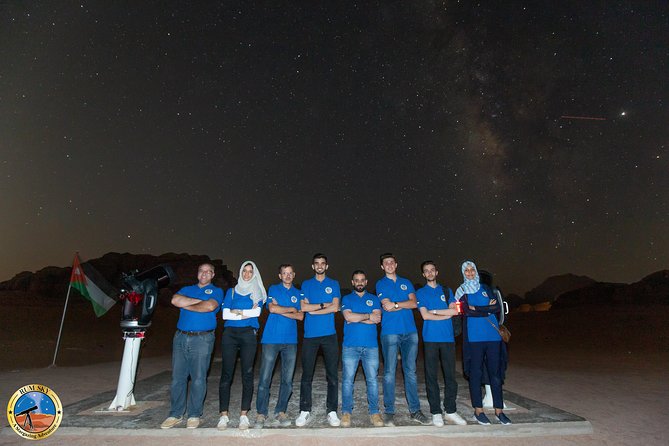
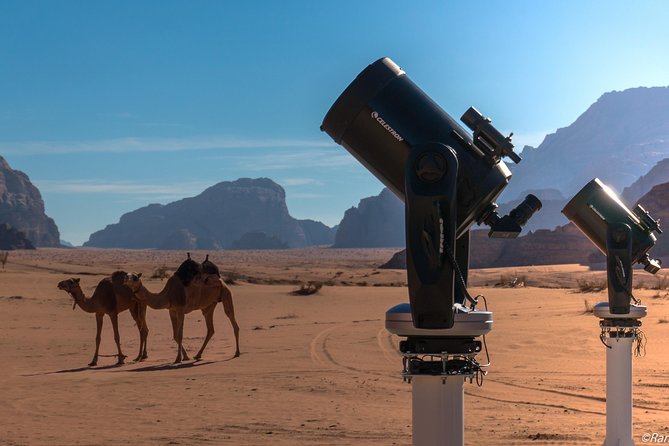
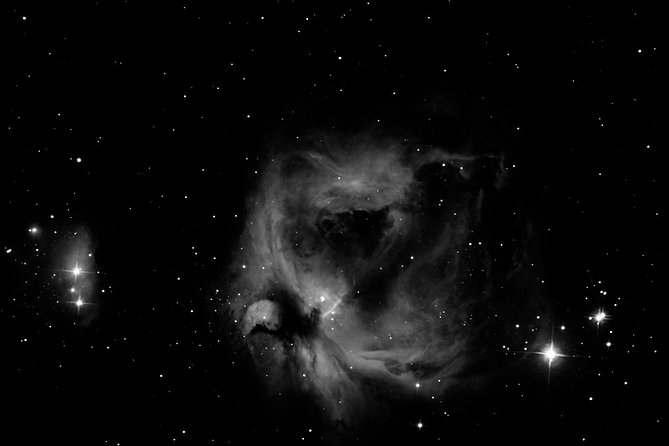
The second 35-minute session takes place around large telescopes fitted with computerized GPS systems. The equipment helps locate targets such as galaxies, nebulae, planets, and moons.
The GPS feature matters because it reduces the time spent manually searching. An astronomer guides the session and selects objects that can be viewed at the time. You may see different types of targets during the night, but the exact lineup is not guaranteed.
A telescope view is also different from an image in a book or on a screen. A galaxy may appear faint. A nebula may not show the same color and detail you have seen in photographs. A planet can look impressive through the eyepiece, but each object requires a little patience and careful viewing.
One account praised the telescopes as excellent instruments and noted that the local astrophotographer offered useful advice to someone who owned a telescope at home. That detail suggests the session can be rewarding for people with a real interest in equipment, not only for first-time sky watchers.
Still, this is a shared activity. You will not have unlimited time at an eyepiece, and other people will be waiting for their turn. If you want long, quiet observation of a single object, a private astronomy session may suit you better. If you want a guided introduction with several possible targets, the rotating format is practical.
Same desert, a completely different kind of day:
- Aqaba: Private Red Sea Diving for Beginner or Experienced
★ 4.9 · 230 reviews - Journey of Diving or Snorkelling from a Boat
★ 5.0 · 218 reviews - Wadi Rum: Bedouin Camp Stay,Full-Day Desert Tour with 3Meals
★ 4.9 · 198 reviews - Hot Air Balloon Flight at Wadi Rum
★ 5.0 · 149 reviews
The two-group rotation keeps the 90 minutes moving
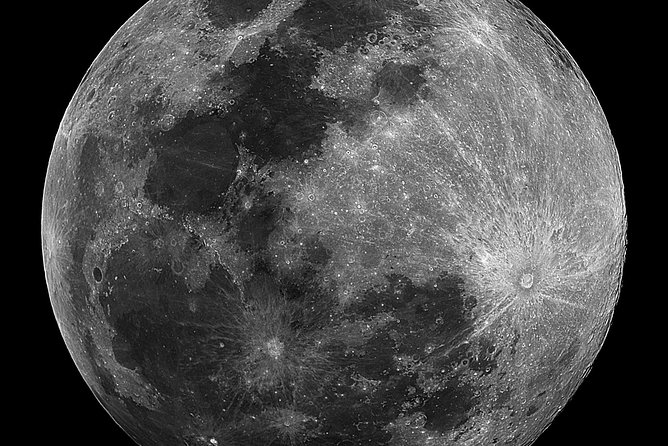
The group split is an important part of the design. With one half outside at the laser and the other half at the telescopes, the program avoids placing everyone around one small viewing point at once.
After about 35 minutes, the groups change places. You receive both parts of the experience, not a choice between them. The full program lasts about an hour and a half, including the presentation and the two outdoor sessions.
The maximum capacity is 120 people. That is a sizeable number, so the mood may feel more like an organized public astronomy program than a private desert evening. The equal-group arrangement helps, but you should not expect silence or personal instruction throughout.
The format works best if you arrive ready to share the experience. You may have to listen closely when the guide points out a constellation, and the telescope time will be limited by the size of your group. In return, you get a well-planned introduction that covers several kinds of astronomy in a short period.
Transfers make the night easier
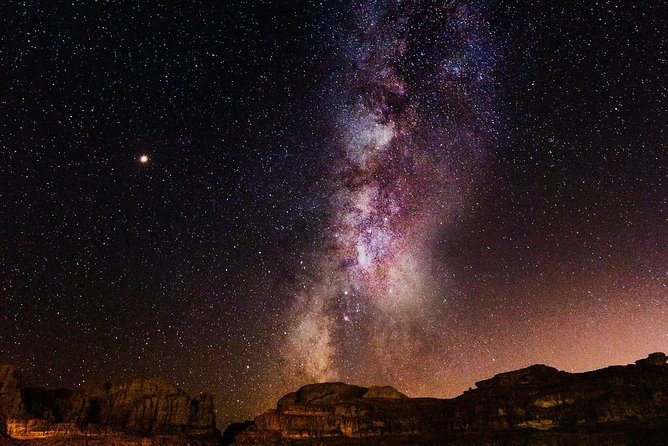
Pickup is offered from most local Wadi Rum camps in the Disi Area. In winter, collection begins around 7:45 PM, after dinner. Summer timing changes, so you should confirm the correct pickup time before the evening.
This is one of the strongest practical features. Driving through the desert at night can be inconvenient, especially if you do not know the tracks or have not arranged a local vehicle. Included transfers let you focus on the sky instead of directions, headlights, and navigation.
The coverage is not described as every camp, so check that your accommodation is included. The transfer is also tied to the local camp area rather than a universal pickup from anywhere in Aqaba. If you are staying outside the listed service zone, confirm the meeting arrangement before paying.
The pickup schedule also explains why the tour works well after dinner. You do not have to rush a meal or choose between eating and stargazing. In winter, the evening starts early enough to fit comfortably into a night at camp.
The final photo is a small but useful extra
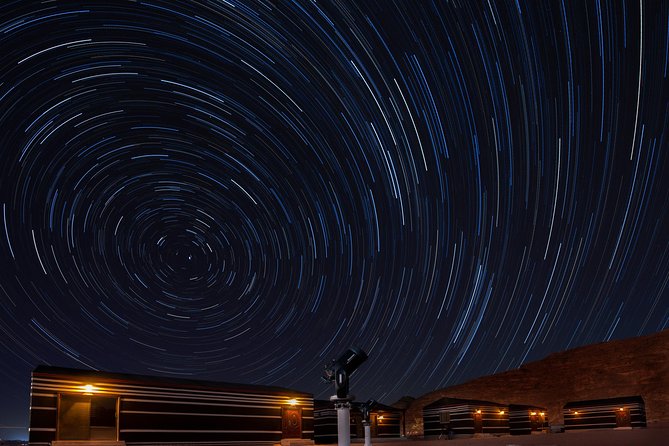
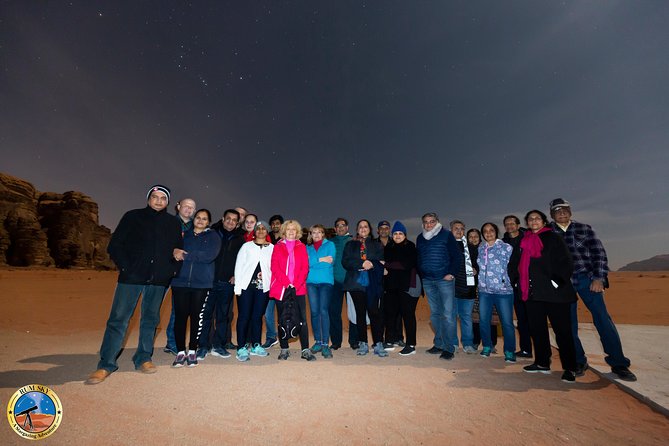
At the end, the team takes a group photo using a time-exposure technique that includes the sky objects. This gives you a keepsake that a normal phone snapshot is unlikely to produce.
The photo is not the main reason to book, but it adds value. Night photography is difficult without a tripod, suitable settings, and a careful exposure. One account noted receiving help from the local astrophotographer with astronomy photography, which may be useful if you are curious about photographing the night sky yourself.
You should treat the photo as a shared souvenir rather than a private portrait session. The group photo includes the people and the sky, so it captures the setting more than a polished individual image.
Is $30 a fair price?
At $30 per person, this is reasonably priced for a structured evening in Wadi Rum. The fee includes the indoor presentation, both outdoor sessions, large telescope viewing, laser-guided astronomy, a group photo, and round-trip transport from most local camps.
The value is strongest if you would otherwise need to arrange a separate night drive. Transport alone can complicate desert plans, and this activity bundles the vehicle with an organized program and specialist equipment.
The price is less compelling if you already have access to powerful telescopes or know the constellations well. It is also important not to compare the telescope view with professional astrophotography. The equipment can show interesting objects, but the view through an eyepiece may appear faint or modest.
Water and soft drinks are available at a reasonable cost, but bottled water is not included. Bring some cash if you want a drink during the evening, and remember that the $30 price does not cover refreshments.
Who will enjoy this most?
I would recommend this experience to first-time sky watchers, families, couples, and anyone staying in Wadi Rum who wants a calm activity after dinner. The presentation gives beginners a starting point, while the telescope session adds enough equipment and science to keep the evening interesting.
It also suits people who like stories. The constellation myths and zodiac explanations give the outdoor session a human side, while the direction-finding lesson connects the stars to desert travel and navigation.
You may want to reconsider if you are an experienced amateur astronomer seeking advanced instruction or long telescope sessions. The program has a fixed schedule, a large possible capacity, and a shared rotation. It is built for a broad audience, not for private research or specialist observation.
The experience is also a poor fit if you need a guaranteed view of a particular planet or deep-sky object. The available targets depend on the night. Good weather is required, and cancellation remains possible when conditions are poor.
Practical details for a smoother evening
Plan to eat before pickup. Winter collection begins around 7:45 PM, and the provider says pickup takes place after dinner. Since summer times change, check the current schedule rather than relying on a winter departure.
Wear clothing suitable for a desert evening. The supplied information does not specify temperatures or provide clothing, but an outdoor night program means you should be ready for changing conditions. Keep your phone handy for the group photo, but do not assume a normal phone will capture the telescope view well.
You can book with a mobile ticket, and confirmation is provided at booking. Service animals are allowed, and most people can participate. The program runs daily during the stated operating period, from 5:00 PM to 11:30 PM.
Free cancellation is available if you cancel at least 24 hours before the start time. Inside that window, the amount paid is not refunded and changes are not accepted. If bad weather causes the provider to cancel, you can select another date or receive a full refund.
Should you book the RumSky Adventure?
Book it if you want a simple, well-organized introduction to the Wadi Rum night sky without arranging your own transport or equipment. The strongest parts are the clear indoor presentation, the chance to learn constellations with a laser, and the rotation between naked-eye viewing and GPS telescopes.
Go in with realistic expectations. This is a group astronomy program, not a private observatory night. The telescope views may be subtle, the laser session may feel elementary to experienced sky watchers, and the desert site may not be as remote from the camps as you imagine.
For $30, the combination of transport, instruction, equipment, and a time-exposure group photo makes good sense for most first-time visitors. Check the pickup area, confirm the seasonal time, and choose a night with a favorable forecast. If those details work for you, this is a worthwhile way to give Wadi Rum a second act after sunset.
FAQ
Where does the stargazing experience take place?
It takes place in Wadi Rum, Jordan, at a desert observatory serving camps in the Disi Area.
How long does the activity last?
The experience lasts approximately 1 hour and 30 minutes.
What time is pickup in winter?
Pickup begins around 7:45 PM in winter and takes place after dinner. Summer pickup times change, so check the current schedule.
Is transportation included?
Yes. Free round-trip transportation is provided from most local Wadi Rum camps. Check that your specific camp is included.
What happens during the indoor presentation?
A professional astronomer gives a 20-minute astronomy presentation on a large screen in a seated hall.
Do I use a telescope during the activity?
Yes. You use large telescopes with computerized GPS systems to view possible targets such as galaxies, nebulae, planets, and moons.
Will I learn about constellations?
Yes. A professional astronomer uses a powerful green laser to explain visible constellations, zodiac signs, star movements, directions, and myths from different cultures.
Is a group photo included?
Yes. The team takes a group photo using a time-exposure technique that highlights objects in the night sky.
Is bottled water included?
No. Bottled water is not included, though water and soft drinks are available for a reasonable cost.
What happens if the weather is poor?
The experience requires good weather. If it is canceled because of poor conditions, you can choose another date or receive a full refund.
Just added around Aqaba
- Wadi Rum Classic 4-Hour Jeep Safari★ 5.0 · 3 reviews
- Wadi Rum: Scenic 2 Hour Jeep Tour or Sunset Jeep Experience★ 5.0 · 7 reviews
- Wadi Rum: Balloons Over Rum★ 5.0 · 18 reviews
- WADI RUM: ALL DAY JEEP TOUR with overnight and full meals★ 5.0 · 3 reviews
- Wadi Rum: 2nights|3Day all-inclusive BedouinDesertExperience★ 4.6 · 9 reviews
- WADI RUM JEEP TOUR WITH ACCOMMODATION | The Jordanian Mappers★ 5.0 · 5 reviews
- Full-Day Jeep Tour in Wadi Rum with Overnight Stay★ 5.0 · 18 reviews
- Full-Day Jeep Tour with Overnight★ 5.0 · 12 reviews
Wadi Rum Desert Tours, compared.
2-Day Tour: Petra, Wadi Rum, and Dead Sea from Amman
Read our review →
2-Day Petra, Wadi Rum and Dead Sea Tour from Amman
Read our review →
3-Day Private Tour from Amman: Petra, Wadi Rum, Dana, Aqaba, and Dead Sea
Read our review →
Wadi Rum Full Day Jeep Tour + Overnight & Dinner in Bedouin Camp
Read our review →
Petra & Wadi Rum: Full Day Private Tour with Hotel Pickup
Read our review →Browse the lists this tour appears in