
Reviewed · COOKING CLASSES
Suhaila (connecting through cooking)
The best part of Suhaila Cooking Class is not the menu. It is the setting: you cook inside a Jordanian family home, with Mohammed, his wife, daughter, and baby sharing food, stories, and everyday life. This feels more personal than a restaurant meal or a polished demonstration.
I like the small-group format, listed for no more than four people, because you should get real time at the counter rather than watch from the back. I also like the meal afterward, served while sitting on the floor in the traditional style. The main caution is value: at $45 per person, some people may expect a longer menu or a market visit, neither of which is guaranteed.
In This Review
- Key points before you book
- A Jordanian evening inside a family home
- What happens after the 6 p.m. meeting
- Cooking the meal, one dish at a time
- Why the family setting matters
- Sitting on the floor for the shared meal
- A small group means more time with the host
- Is $45 a fair price?
- Food requests and cooking confidence
- The recipe PDF is useful after Aqaba
- Who will enjoy this Aqaba experience?
- Booking, timing, and cancellation
- Should you book Suhaila Cooking Class?
- FAQ
- Where does Suhaila Cooking Class take place?
- What time does the class start?
- How long does the experience last?
- How many people can join?
- What food will I cook?
- Can I request vegetarian or vegan food?
- Do I receive the recipes afterward?
- Can I cancel for a full refund?
Key points before you book
- A family home in Aqaba: You cook and eat with Mohammed and his family rather than in a formal cooking school.
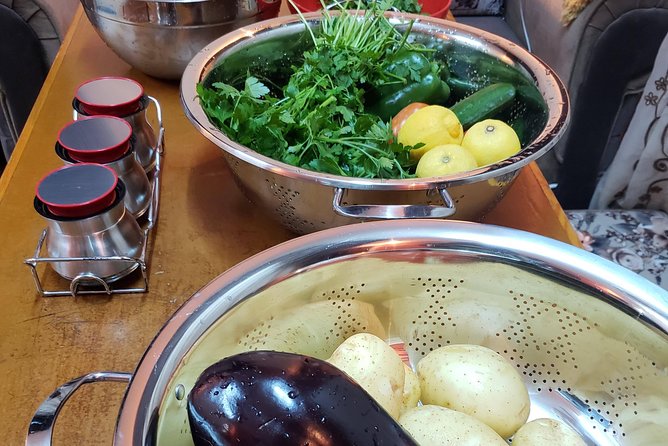
- A short, hands-on menu: Expect to prepare traditional dishes such as lentil soup, vegetables, salad, a dip, or a main dish.
- A very small group: The activity is listed for a maximum of four people, though the general description says six or fewer.
- A 6 p.m. start: Allow about three to three and a half hours, with the activity ending back at the meeting point.
- Vegetarian and vegan options: Ask for these when booking, rather than waiting until the class begins.
- Recipes for later: You receive a cooking-book PDF by email after the class.
A Jordanian evening inside a family home
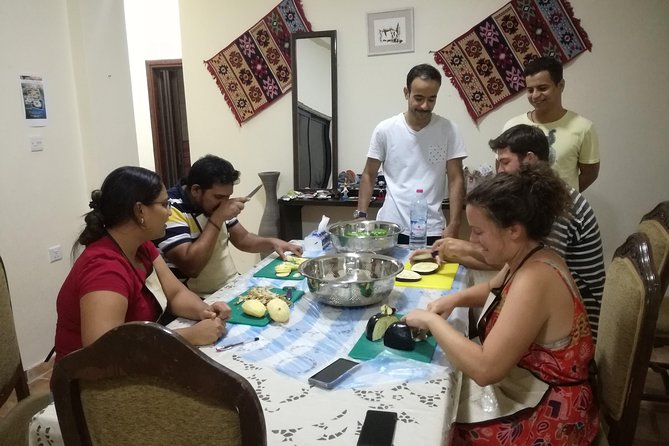
Suhaila Cooking Class gives you a different way to meet Aqaba. Instead of simply ordering Jordanian food, you take part in making it, then sit down with the people who prepared it. The family setting is the real draw.
Mohammed hosts the class with his wife and children. The home setting means the evening can include ordinary conversation about Jordanian life, religion, food customs, and family routines. That is useful cultural context, especially if your Aqaba visit is otherwise built around hotels, beaches, and organized sightseeing.
You should arrive ready for conversation, not just instruction. The host describes the class as a way to share stories through food. That means you may learn as much from the talk around the chopping board as from the recipe itself.
The atmosphere is intended to be relaxed. You do not need cooking experience, and there is no pressure to produce restaurant-quality work. You will be guided through the meal, with plenty of opportunity to ask questions and handle the ingredients yourself.
A few more Aqaba trips to weigh up
- Private Half Day Jerash Visit & Optional Cooking Class from Amman
★ 4.5 · 36 reviews - Half Day Cooking Class Experience with Amman Panoramic Tour
★ 4.5 · 16 reviews - Cooking outside in little Petra between the Mountains.
★ 5.0 · 6 reviews
What happens after the 6 p.m. meeting
The class begins at 6 p.m. at the stated meeting point in Aqaba, listed as مخيم الهضبة البرونزيةش. وادي رم، العقبة، منيشير الأردن, with the location code GXWW+V76. The activity ends at that same point.
Because the address is written in a way that may be difficult to read if you do not speak Arabic, check the meeting details carefully after booking. Confirmation is normally sent at booking, but a reservation made within four hours of departure may require extra time for confirmation.
The experience lasts roughly three hours, with the description allowing three to three and a half hours. That makes it a good fit for an evening plan, but do not schedule another fixed activity immediately afterward. Cooking, conversation, and the shared meal can take a little longer than a timed restaurant visit.
The activity is near public transportation. The supplied details do not specify a particular bus route or pickup service, so you should not assume hotel transfer is included.
Cooking the meal, one dish at a time
The exact menu can vary. The class description promises a typical Jordanian meal and gives vegetarian and vegan preparation by request. It does not promise a fixed list of dishes.
The food prepared in past classes has included Jordanian lentil soup, vegetables, salad, a dip, and a main dish. This tells you what the evening may look like, but not what you will cook on your particular date. If a specific dish matters to you, ask before booking.
The work is hands-on. You will explore unfamiliar ingredients, learn how they are used, and follow the host’s directions. The point is not to race through several elaborate recipes. It is to understand how a home meal comes together and why particular foods matter in Jordanian households.
That distinction matters when you compare this class with a professional cooking workshop. A formal school might offer a longer menu, printed recipes during the lesson, or a more structured sequence. Here, the value comes from cooking in a real home and talking with a local family.
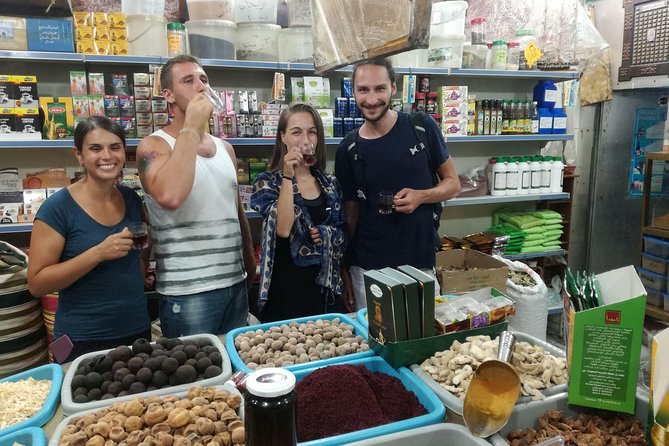
One past booking prepared a soup, a main dish, and a dip. That is a reasonable amount for a three-hour home class, but it may feel modest if you expected a market tour and a large tasting menu. The activity does not guarantee a market visit, so treat any shopping excursion as something to confirm, not part of the core plan.
Why the family setting matters
Many food classes teach you how to make a dish. This one also gives you a chance to ask what food means at home in Jordan.
Conversation may touch on recipes, religious traditions, Jordanian people, and daily life. Families with children may especially appreciate the informal setting, since the host’s children are part of the household rather than hidden behind a formal presentation.
The setting can also make the evening feel less staged. You are not being shown a generic version of Jordanian culture in a large group. You are sharing an evening with one family, and that naturally brings small details and personal stories into the experience.
Of course, a family home is not the same as a restaurant. The pace may be casual, the menu may be simple, and the evening may depend on conversation between people who have just met. If you want a tightly scripted class with constant instruction, this may feel too loose. If you want contact with local life, that informality is the point.
Same desert, a completely different kind of day:
- Wadi Rum Full Day Jeep Tour + Overnight & Dinner in Bedouin Camp
★ 5.0 · 368 reviews - Wadi Rum: Morning or Sunset Jeep Tour
★ 5.0 · 285 reviews - Aqaba: Private Red Sea Diving for Beginner or Experienced
★ 4.9 · 230 reviews - Journey of Diving or Snorkelling from a Boat
★ 5.0 · 218 reviews
Sitting on the floor for the shared meal
After the cooking, you eat together sitting on the floor. This is presented as the traditional way, and it changes the feel of the meal. You are not just consuming food at the end of a lesson. You are taking part in a social custom.
The shared meal is where the separate parts of the class come together. You have handled the ingredients, watched the dishes take shape, and can ask questions while eating. The food becomes a starting point for talk rather than the only event.
You should consider your own comfort. The supplied information does not give details about seating alternatives, so ask ahead if sitting on the floor is difficult for you. That is not a criticism of the format. It is simply a practical point worth settling before you reserve.
A small group means more time with the host
The experience is promoted as a small-group class of six people or fewer, while the additional booking details set the maximum at four. Either way, this is far smaller than a typical group food tour.
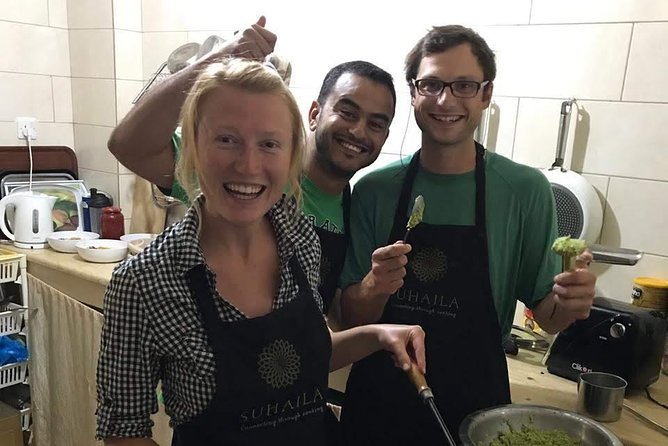
A group of four gives you room to ask questions and take part in the preparation. You are less likely to spend the class watching someone else chop vegetables. It also makes conversation with Mohammed and his family easier.
The trade-off is that a very small class may be canceled if the minimum number of participants is not reached. If that happens, you are offered another date or experience, or a full refund. Keep this in mind if you are building a tight schedule around the booking.
Group discounts are available, so the price may work better for couples, families, or a small party traveling together. The standard listed price is $45 per person.
Is $45 a fair price?
The answer depends on what you want from a cooking class. If you measure value by the number of dishes, $45 can feel high. One class produced soup, a main dish, and a dip, and the market visit some people expected did not take place.
The host explains that the price includes food and a large share of booking-platform fees. That does not change your budget, but it helps explain why the cost is higher than buying the same ingredients and cooking independently.
I would consider the price reasonable if you place a high value on the home setting, personal conversation, and a meal shared with a Jordanian family. You are paying for access to an experience that is difficult to reproduce on your own, not just for three recipes.
I would think twice if your main goal is technical cooking instruction or maximum food quantity. In that case, check the menu in advance and ask exactly what you will prepare. The class is best understood as a cultural meal with cooking, not as an intensive chef-training session.
Food requests and cooking confidence
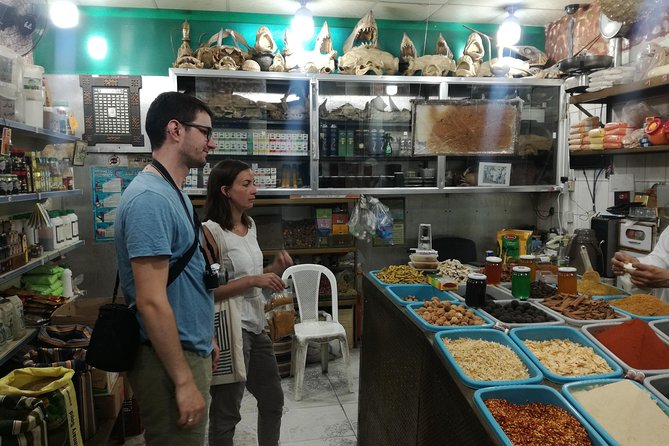
The class welcomes beginners. You do not need a particular skill level, and the host says there is no need to feel stressed about cooking.
Vegetarian and vegan meals can be arranged by request. Make that request before the class so the family can plan the ingredients. The supplied information does not list allergy procedures, so anyone with a serious allergy should ask direct questions before booking.
The flexible format may suit families and mixed-ability groups. A confident cook can ask about methods and ingredients, while a beginner can follow along without feeling tested.
Keep in mind that the menu is not fully fixed. If you have dietary needs, dislikes, or a special interest in a particular Jordanian dish, confirm what is possible rather than assuming it will appear.
The recipe PDF is useful after Aqaba
After the class, the family sends a cooking-book PDF by email. This is a small but worthwhile feature. Food memories often fade once you leave Jordan, and a recipe file gives you a way to recreate at least some of the meal at home.
The PDF also helps balance the informal nature of the class. You may not write down every measurement while talking and cooking, so having the recipes afterward is practical.
Do not treat it as a full professional cookbook unless that is explicitly confirmed. The information promises a PDF with the dishes, not a large collection of Jordanian recipes. Still, it gives the evening a life beyond one meal.
Who will enjoy this Aqaba experience?
I would recommend the class to you if you want:
- A personal meeting with a Jordanian family
- A calm evening activity in Aqaba
- A small group with hands-on cooking
- A meal that includes cultural conversation
- A vegetarian or vegan option arranged in advance
- A simple way to learn recipes you can try at home
Families may find the informal setting appealing, since the host’s children are part of the household. Couples and solo visitors can also benefit from the small group, especially if they enjoy asking questions and sharing a meal with people they have just met.
I would be more cautious if you want a market tour, a long list of dishes, advanced cooking technique, or a polished classroom. Those features are not guaranteed here.
The class has a 4.7 rating from 24 reviews, with 92 percent recommending it. The strongest pattern is clear: the family’s warmth and the chance to discuss Jordanian life are the features people value most. The weaker point is also clear: expectations about price, menu size, and a market visit need to be set correctly.
Booking, timing, and cancellation
The class is usually booked about 38 days in advance, so reserve early if the 6 p.m. date is important to you. Confirmation is normally immediate, except for bookings made within four hours of the start time, which are confirmed as soon as possible if space remains.
You can cancel for a full refund up to 24 hours before the local start time. Cancellations or changes made inside that period are not refunded or accepted. Since the class requires a minimum number of participants, the provider may also cancel and offer another date, another experience, or a full refund.
The tour is listed with a mobile ticket, so keep your booking confirmation available on your phone. Group discounts may make it a better deal for a small party.
Should you book Suhaila Cooking Class?
Book it if you want the human side of Jordanian food: a family home, simple shared cooking, conversation, and a floor-seated meal. The small group and recipe PDF add practical value, while the family setting gives the evening its character.
Skip it if you are mainly paying for a large menu or a market excursion. At $45, you should confirm the dishes and dietary arrangements before booking, then treat the class as a cultural home visit with cooking rather than an intensive culinary course.
For the right kind of visitor, this is one of Aqaba’s more personal evening options. Go with an open schedule, arrive ready to talk, and judge the value by the connection as much as by the number of plates.
FAQ
Where does Suhaila Cooking Class take place?
The class takes place in a family home in Aqaba. The stated meeting point is مخيم الهضبة البرونزيةش. وادي رم، العقبة، منيشير الأردن, Aqaba, Jordan, with location code GXWW+V76.
What time does the class start?
The stated start time is 6 p.m.
How long does the experience last?
Allow about three to three and a half hours.
How many people can join?
The additional details list a maximum of four participants. The general description presents the class as a small group of six people or fewer.
What food will I cook?
You will prepare a typical Jordanian meal. Dishes may include lentil soup, vegetables, salad, a dip, or a main dish, but the exact menu is not fixed in the supplied details.
Can I request vegetarian or vegan food?
Yes. Vegetarian and vegan meals are available by request. Make the request before the class.
Do I receive the recipes afterward?
Yes. A cooking-book PDF is sent by email after the class.
Can I cancel for a full refund?
Yes, if you cancel at least 24 hours before the local start time. Cancellations or changes made less than 24 hours before the start are not refunded or accepted.
Just added around Aqaba
- Wadi Rum Classic 4-Hour Jeep Safari★ 5.0 · 3 reviews
- Wadi Rum: Scenic 2 Hour Jeep Tour or Sunset Jeep Experience★ 5.0 · 7 reviews
- Wadi Rum: Balloons Over Rum★ 5.0 · 18 reviews
- Wadi Rum: 2nights|3Day all-inclusive BedouinDesertExperience★ 4.6 · 9 reviews
- WADI RUM: ALL DAY JEEP TOUR with overnight and full meals★ 5.0 · 3 reviews
- WADI RUM JEEP TOUR WITH ACCOMMODATION | The Jordanian Mappers★ 5.0 · 5 reviews
- Full-Day Jeep Tour in Wadi Rum with Overnight Stay★ 5.0 · 18 reviews
- Full-Day Jeep Tour with Overnight★ 5.0 · 12 reviews
Cooking Classes, compared.

Private Half Day Jerash Visit & Optional Cooking Class from Amman
Read our review →
Half Day Cooking Class Experience with Amman Panoramic Tour
Read our review →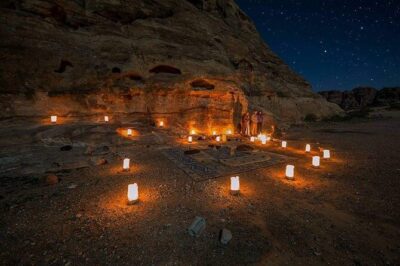
Cooking outside in little Petra between the Mountains.
Read our review →
Private 2 Hour Cooking Class with the Locals in Amman
Read our review →Browse the lists this tour appears in